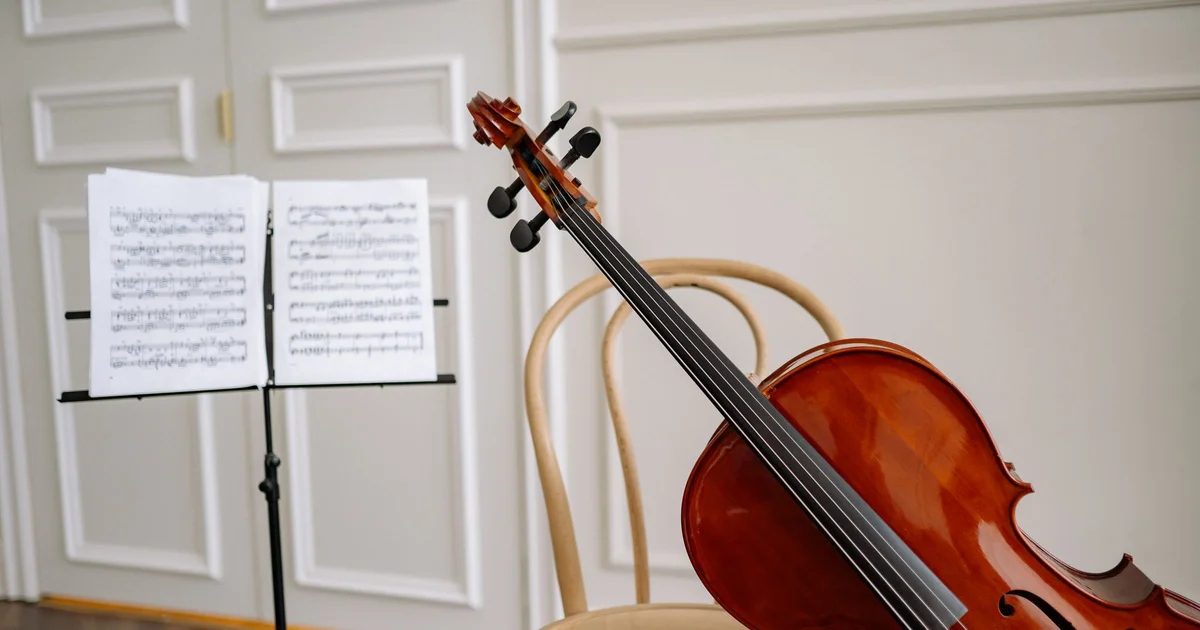
Play Cello Online — Free Virtual Cello with Bowed String Tone
Bow a virtual cello in your browser: two octaves of warm bowed strings with vibrato, keyboard and MIDI, record and download — no install.
The neck reads low to high: Z–, play the lower octave, Q–U the upper. Hold notes and let the vibrato settle in, the way a bow arm does.
How to Play in Four Steps
- Tap a position on the fingerboard — the left column is the low C, the run climbs to the right.
- Hold a note and listen for the vibrato to arrive; that delay is what a bow stroke sounds like.
- Mark a phrase on the lower strings, then play it back while you add the upper line.
- Connect a MIDI keyboard for a longer line, then record and download your take.
A Short History of the Cello
The cello took its present shape in seventeenth-century Italy, alongside the violin and viola. It replaced the bass viol because a violin-family instrument could project through an orchestra and could also sing a melody in the tenor register.
Bach gave it the six solo suites, players like Casals brought them back to concert halls in the twentieth century, and composers from Dvorak to Shostakovich and film scorers such as John Williams made the cello the instrument that carries the melody in the low middle.
Acoustically, rosined bow hair catches the string and releases it thousands of times a second, so the tone is sustained and rich in overtones — reproduced here with a slow attack, a bow-noise transient and a vibrato that arrives after the note.
Cello Quiz
0 / 3 · Score
How is the cello tuned, bottom string first?
What family is the cello in?
Who wrote the six solo suites for cello?
Frequently Asked Questions
Tap a note on the fingerboard, tap a note in the strip, use the two keyboard rows, or connect a MIDI keyboard. Every path plays the same bowed-string voice with a slow attack and vibrato.
C2, G2, D3 and A3, a fifth apart from the bottom up. That tuning is why cello music crosses strings so often and why double stops sound so full.
C3 to C5, two octaves plus the top C. A real cello reaches lower and higher, but this is the register most first and second-year music sits in.
A bowed string sounds when rosin grips the string, which takes a moment. The voice models that slow attack and adds the bow-hair noise at the start.
A rocking left-hand motion that varies the string length slightly, so the pitch wavers. It arrives after the note starts, which is why the voice delays the vibrato by about a third of a second.
Bach wrote six unaccompanied suites that remain the core of the repertoire, and Elgar, Dvorak and Shostakovich all wrote concertos that put the cello in front of an orchestra.
Yes, and it is not unusual: the cello can be played seated and its strings are reachable from the start, which is why the Bach suites are playable by dedicated beginners on the first string.
Yes. Record, play, stop and download — the file is written by the browser from the master bus, with no upload and no account.