Play Sitar Online — Free Virtual Sitar
Play sitar in your browser with jawari buzz and sympathetic shimmer, keyboard and MIDI — no download.
Bottom row plays C4–B4, top row C5–B5. Slide across keys for meend-like glissando. Keys Z–M and Q–U.
How to Play in Four Steps
- Play the two-octave fretboard — bottom row C4–B4, top row C5–B5.
- Slide across keys while holding: the glissando bends like meend ornamentation.
- Listen for the sympathetic shimmer ringing behind every plucked note.
- Shift octaves or connect MIDI for ragas across the range, then record.
A Short History of the Sitar
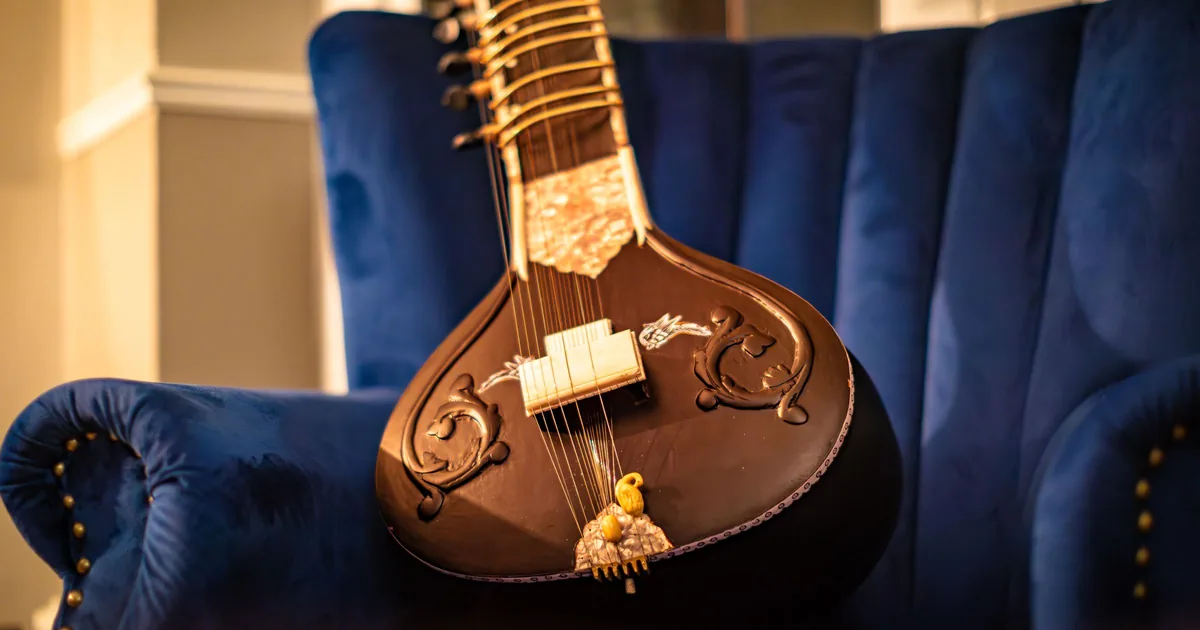
The sitar matured in 18th-century Mughal India, blending Persian setar ideas with Indian drone traditions. Its wide curved frets let players pull notes sideways for meend glides, while sympathetic tarab strings ring beneath every phrase.
Ravi Shankar carried it to the world stage in the 1960s, followed by Vilayat Khan and today Anoushka Shankar. It remains the defining voice of North Indian classical music. Explore that sound on this free virtual sitar web app — an interactive sitar online.
Acoustically, steel strings buzz over a wide jawari bridge while tarab sympathetic strings ring beneath — reproduced with a resonant bandpass plus octave-and-fifth shimmer.
Sitar Quiz
0 / 3 · Score
What is the buzzing bridge sound of the sitar called?
Which strings ring without being plucked?
Who brought the sitar to global fame in the 1960s?
Frequently Asked Questions
Play the on-screen keys, use Z–M for the lower octave and Q–U for the upper, slide for meend-like ornamentation, or connect a MIDI keyboard.
Each pluck runs through a resonant bandpass that mimics the jawari bridge buzz, with quiet octave and fifth partials ringing like sympathetic strings.
Each pluck runs through a resonant bandpass that mimics the jawari bridge buzz, with quiet octave and fifth partials ringing beneath like sympathetic strings.
Yes. Two chromatic octaves include every komal and tivra pitch for morning and evening ragas, with meend-style slides and a Sa–Pa sympathetic drone under your melody.
Yes — connect any keyboard or pad and its notes play the jawari voice with sympathetic resonance, like a virtual sitar MIDI controller target.
Yes. It is 100% free in your browser — no fees, logins or accounts — and you can record your take straight from the master bus.